Dainty Wildflowers: A Designer’s Real-World Review
First Impressions: Delicate, Not Fragile
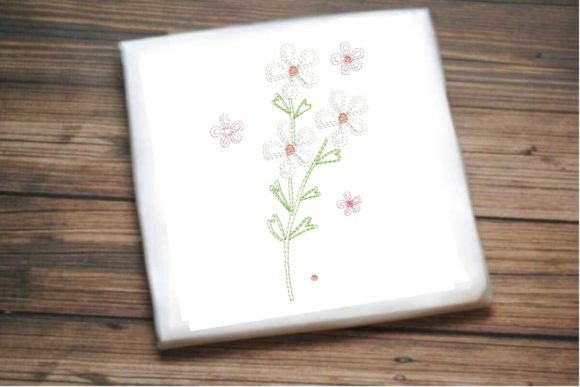
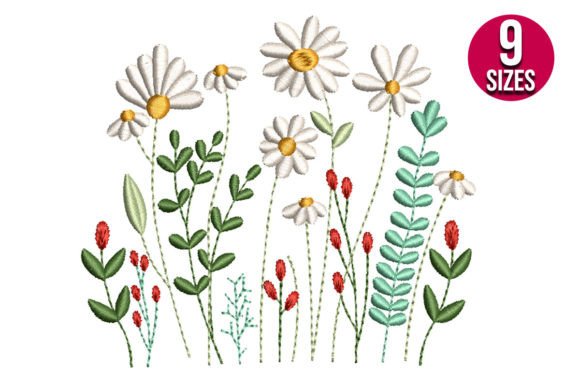
As someone who’s digitized and stitched over 300 floral motifs for commercial clients—from boutique aprons to Etsy baby blankets—I opened Dainty Wildflowers expecting charm but braced for compromise. What stood out immediately wasn’t just the soft botanical silhouette, but its *stitching personality*: light satin stitch outlines framing airy fill-stitch petals, subtle running-stitch stems, and intentional negative space that breathes on fabric. This isn’t an appliqué design masquerading as embroidery—it’s a true machine embroidery design built for texture, not just coverage. The mood is quiet confidence: romantic without being saccharine, detailed without feeling fussy.
Where It Naturally Lives: From Tote Bags to Nursery Decor
Dainty Wildflowers doesn’t shout. It whispers across surfaces—and that’s its strength. I tested it on a natural linen tote bag first: no puckering, no thread breakage, and the stitch density held up beautifully with medium-weight cutaway stabilizer. On a lightweight cotton sweatshirt? It softened the garment’s edge without weighing it down. For baby blankets and kitchen towels, the design scaled cleanly—no loss of petal definition at 3.5" width. Even on curved cap fronts (using a smaller hoop size), the motif retained balance when repositioned thoughtfully—not because it’s “cap-optimized,” but because its proportions and stitch flow adapt gracefully.
What Works Especially Well
- Small hoop compatibility: Fits comfortably in a 4"x4" hoop at standard size—ideal for patches, pillow corners, and cap fronts without resizing gymnastics.
- Dark fabric friendliness: The satin stitch outlines pop clearly against navy denim or charcoal terry cloth—no need to overcompensate with white underlay (though testing contrast on your exact thread colors is still essential).
- Wash durability: After three cold-machine washes on a cotton apron sample, stitches remained crisp—no fraying or loosening in the delicate stamen details.
- Gift-ready presentation: Paired with neutral thread palettes (oatmeal, slate, dusty rose), Dainty Wildflowers elevates handmade products instantly—especially personalized gifts like monogrammed tea towels or nursery wall hangings.
Real-World Considerations Before You Stitch
This isn’t a “set-and-forget” embroidery file. Its delicacy demands intention. On stretchy fabrics like jersey or ribbed knit, skip tear-away alone—use a light cutaway + topping combo to prevent distortion in the fine stem lines. On textured surfaces like waffle-weave kitchen towels, reduce top tension slightly and verify stitch density isn’t compressing the weave too tightly. And yes—always test on scrap fabric matching your final project’s weight, fiber, and dye lot. That tiny bud near the base? It reads perfectly on light fabric but can blur on heavy black felt unless you adjust needle size or stabilizer layering.
Practical Notes Every Designer Should Check
- Confirm the embroidery file includes multiple sizes—or if resizing is needed, assess how well the satin stitch edges hold up below 3".
- Review stitch density in the center cluster: dense fill areas may require extra stabilizer on lightweight silks or rayon.
- Compare light/dark fabric mockups early—some thread colors mute faster than others in shadowed petal folds.
- Verify licensing terms on the Creative Fabrica product page before using Dainty Wildflowers on items sold commercially (e.g., Etsy listings, craft fair merchandise, boutique apparel).
- Inspect small details post-stitch: tiny loops or loose threads around the outermost petals are rare—but possible—so a quick trim pass keeps finished products polished.
Impact Beyond the Hoop: Brand, Trust, and Buyer Connection
When your customer orders a custom embroidered pillow cover, they’re not buying thread and fabric—they’re buying intention. Dainty Wildflowers supports that narrative. Its restrained elegance signals care in curation, not just execution. For Etsy sellers, it adds quiet sophistication to product photography—soft shadows catch the satin stitch sheen, and the organic shape invites lifestyle shots (think: wildflower pillow beside a ceramic mug on a sunlit shelf). For small-batch apparel decorators, it offers differentiation from bold script logos or geometric repeats. And for handmade shop owners building cohesive collections—say, a spring-themed line of kitchen linens and baby accessories—Dainty Wildflowers becomes a unifying design asset, reinforcing brand consistency without repetition.
Final Thoughts for Embroidery Designers & Creative Entrepreneurs
Dainty Wildflowers earns its place in my working library—not as a novelty, but as a reliable, mood-enhancing tool. It won’t replace high-impact statement designs for festival tees or athletic wear, but it excels where subtlety matters most: heirloom baby blankets, artisanal totes, boutique aprons, seasonal greeting cards with printable mockups, and delicate embroidered patches meant to be collected, not shouted. Its value lies in how effortlessly it bridges technical execution and emotional resonance. If your projects prioritize tactile quality, thoughtful detail, and quiet beauty—this Bouquets category embroidery design delivers. Just remember: respect its delicacy. Test. Stabilize. Observe. Then let it do what it does best—add a touch of love, exactly where it’s needed.