One Line Flower Bouquet
A Designer’s First Impression: Delicate, Intentional, Unfussy
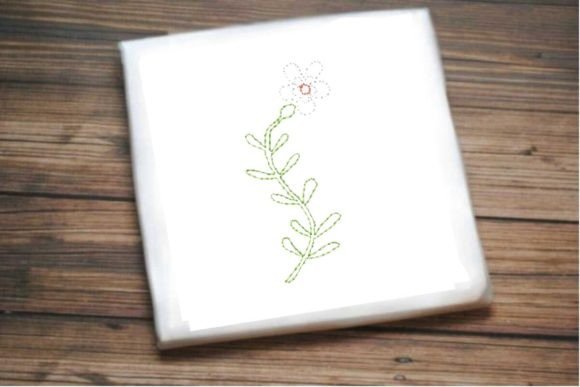
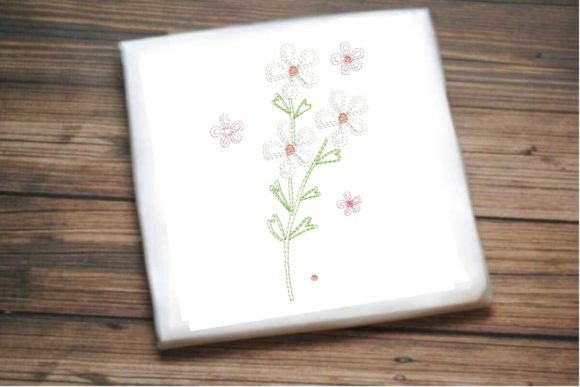
When I opened the One Line Flower Bouquet embroidery file, what struck me wasn’t complexity—it was quiet confidence. This isn’t a floral explosion; it’s a single, fluid line that curls and loops into stems, buds, and open blossoms with elegant economy. There’s no filler, no dense satin stitch clusters—just one continuous gesture rendered in running or fine stem stitch (depending on your machine’s interpretation). It feels like sketching with thread: light, lyrical, and deeply intentional. For designers who value restraint over ornamentation, this is a breath of fresh air—and exactly the kind of embroidery design that elevates a handmade product without shouting.
Where It Shines: Real Projects, Real Customers
Last week, I used One Line Flower Bouquet to embroider a set of linen tea towels for a local boutique. The client wanted “soft but not saccharine”—something that felt artisanal, not mass-produced. We stitched it just below the hem, left-aligned, in ecru thread on oat-colored fabric. The result? Instant warmth. Customers paused at the rack. Not because it was flashy, but because it felt *considered*. That’s the power of this design: it reads as handmade, not machine-made—even when it is.
It works beautifully on sweatshirt cuffs, baby onesie hems, and minimalist tote bags—places where subtlety builds trust. As an Etsy seller, I’ve found buyers respond strongly to pieces where the embroidery feels like part of the object’s story, not an afterthought. A delicate One Line Flower Bouquet on a ceramic mug sleeve? Yes. On a patch for a denim jacket? Absolutely—especially when paired with raw-edge finishing. It also translates well to holiday embroidery: think monogrammed ornaments or linen napkins for spring gatherings. Its simplicity makes it versatile across seasons and audiences.
Where to Proceed Thoughtfully
This design rewards intention—and punishes haste. Because it relies on clean line work, small imperfections become visible fast. On stretchy fabric like jersey or thin cotton poplin, you’ll need medium-weight cutaway stabilizer underneath and possibly a light tear-away on top to prevent puckering along the curve of the stem. On dark fabric, test contrast carefully: a pale thread may disappear unless you add a subtle underlay or choose matte cotton rather than glossy polyester.
Curved surfaces—like caps or baby beanies—require extra attention. The line’s gentle arc can distort if hooped too tightly or stitched without proper tension calibration. And while it’s lovely on pillow covers and aprons, avoid placing it near high-friction seams or edges that get folded repeatedly; fine line work wears faster than dense fill stitch. Also, don’t assume it scales down perfectly for tiny hoops (under 3”): inspect the smallest petals and buds in your embroidery software first. Some versions of this design may simplify details at smaller sizes—others won’t. Always check.
Design Assets That Build Brand Consistency
For small shop owners and creative entrepreneurs, One Line Flower Bouquet is more than decoration—it’s a quiet brand signature. Used consistently across packaging tags, thank-you cards, and product labels (as a printed motif or embroidered accent), it creates visual cohesion without repetition fatigue. Unlike bold florals that dominate, this design supports your voice instead of competing with it. When customers see it on a hand-stitched kitchen towel, then again on a custom-embroidered sweatshirt, they subconsciously register continuity and care.
What It Does for Your Finished Product
Let’s be practical: this design doesn’t “sell itself.” But it *supports* selling—by enhancing perceived value, reinforcing handmade authenticity, and inviting closer inspection. A personalized gift with One Line Flower Bouquet stitched beside a name feels curated, not generic. On commercial embroidery projects—say, branded merchandise for a local florist or café—it adds sophistication without overwhelming the message. And because it’s minimalist, it pairs effortlessly with typography or other motifs in layered designs (though avoid overcrowding—this piece thrives in breathing room).
Essential Embroidery Designer Notes
- Always test first: Stitch One Line Flower Bouquet on scrap fabric matching your final project’s weight, weave, and stretch.
- Review stitch density: Minimalist doesn’t mean low-density—but verify there’s enough underlay to anchor the line on lightweight fabrics.
- Confirm hoop size: While likely optimized for standard 4x4 or 5x7 hoops, double-check the file dimensions before loading.
- Inspect small details: Zoom in on terminal points—do buds end cleanly? Are curves smooth, or do they show jagged vector artifacts?
- Test black-and-white mockups: How does it read in grayscale? If it flattens into a blur, adjust thread contrast or consider a slight outline.
- Compare light/dark backgrounds: Try stitching it in both charcoal and ivory thread on neutral fabric to gauge versatility.
- Use appropriate stabilizer: Cutaway for knits, tear-away for stable wovens, and fusible for lightweight linens.
- Check licensing: Since this is a digital embroidery file, confirm whether personal use, small business resale, or unlimited commercial embroidery rights are included—before listing finished products or reselling the file.
Final Thought: Less Is Anchored, Not Empty
There’s a difference between minimal and underdeveloped—and One Line Flower Bouquet lands firmly on the right side. It doesn’t try to do everything. It asks for thoughtful placement, smart stabilization, and respectful execution. When those conditions are met, it delivers something rare in machine embroidery: quiet elegance that feels human-made. Whether you’re stitching for a client, building a craft business, or creating a meaningful personalized gift, this design earns its place—not by demanding attention, but by holding it gently.