Delicate Floral Borders: A Designer’s Real-World Review
First Impressions: Soft, Intentional, and Quietly Confident
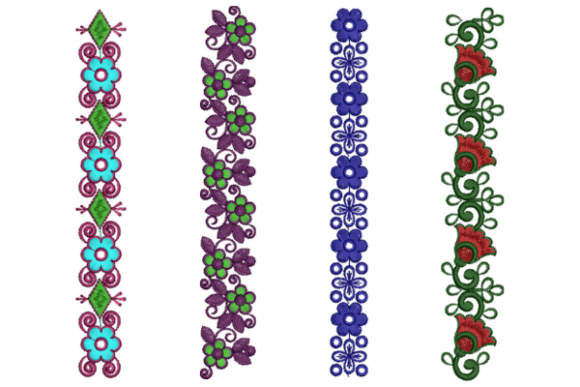
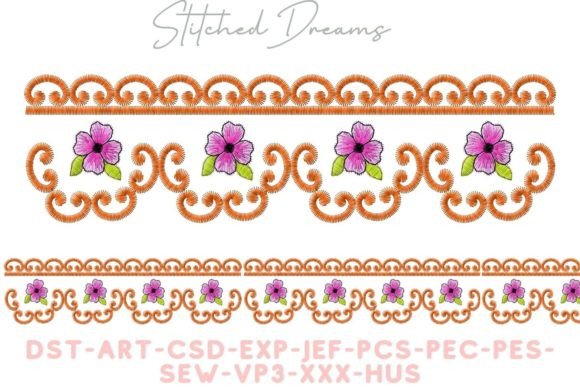
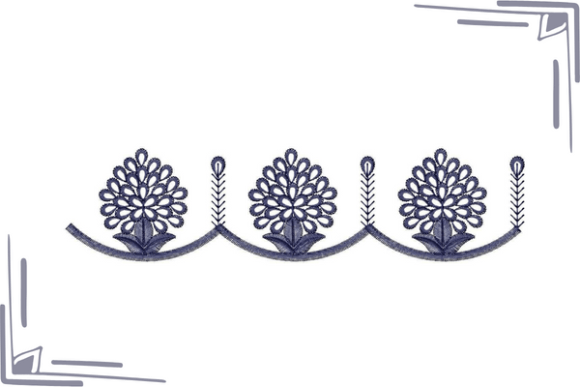
When I opened Delicate Floral Borders, I didn’t see “cute” or “trendy”—I saw intention. The motifs are light in line weight, with gentle curves and open negative space between blossoms and vines. There’s no visual shouting here. Instead, it breathes like a hand-drawn sketch translated into stitch: fine stems, subtle petal layering, and rhythmic spacing that invites the eye to wander—not rush. It feels like something you’d choose for a baby’s linen blanket, not a festival tote. That’s its strength—and its boundary.
A Real Project Test: Embroidering a Linen Kitchen Towel Set
Last week, I used Delicate Floral Borders on a set of heavyweight linen tea towels for a local boutique launch. We stitched the border along the bottom hem—about 8 inches wide—with pale sage thread on natural undyed linen. The result? Instant warmth. Not flashy, but unmistakably handmade. Customers at the pop-up kept saying, “It looks like it belongs there,” which is high praise for any embroidery file. That’s what Delicate Floral Borders does best: it enhances, never overpowers. It doesn’t scream “embroidery”—it whispers “care.”
Where It Shines (and Where It Asks for Help)
Delicate Floral Borders works beautifully on stable, medium-weight fabrics: cotton twill for aprons, brushed cotton for pillow covers, terry cloth for guest towels, and midweight knits for relaxed-fit sweatshirts. On a structured tote bag, it frames the base edge with quiet elegance—especially when paired with minimal monogramming. For baby embroidery, it adds tenderness to onesies and burp cloths without risking bulk or stiffness.
But—and this matters—it’s not a one-size-fits-all machine embroidery design. On thin or highly stretchy fabric (like lightweight jersey or rayon challis), those fine stems can distort without careful stabilization. I tested it on a curved cap front and found the outermost petals stretched slightly; it’s better suited to flat or gently contoured surfaces like pillow covers or flat-panel aprons. And while it reads well on light and medium fabric tones, avoid pairing it with very dark backgrounds unless you’re using high-contrast thread—those delicate outlines need breathing room.
What It Adds to Your Finished Product
This isn’t just decoration. Delicate Floral Borders elevates perceived value. When stitched cleanly, it signals attention to detail—something Etsy sellers and boutique owners know customers pay for. A personalized gift wrapped in a towel edged with this design feels considered, not mass-produced. For craft businesses, it supports brand consistency: soft, botanical, unhurried. It also boosts buyer engagement in digital previews—printable mockups show how gracefully it integrates into lifestyle scenes, especially beside ceramics, dried florals, or woven baskets.
That said, don’t expect bold recognition from across the room. This is not a logo-style embroidery file. Its charm lives in proximity—in the hand-stitched feel of a holiday embroidery on a linen napkin, or the refined finish of a wedding guest towel. It builds trust through restraint.
Designer Notes You’ll Actually Use
- Always test first. Run Delicate Floral Borders on scrap fabric matching your final project’s weight and weave—even if it’s “just a towel.” Stitch density and thread tension shift more than you think.
- Stabilizer is non-negotiable. A medium-weight cutaway or tear-away works well for most applications, but for knits or sheer fabrics, add a light topping to prevent thread sinking.
- Thread colors make or break it. Try matte cottons over glossy poly—subtle sheen helps the satin stitch petals read clearly without glare. Test black and white mockups to confirm contrast before committing to a full run.
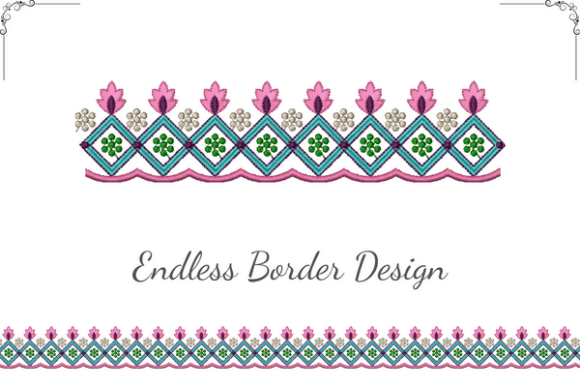
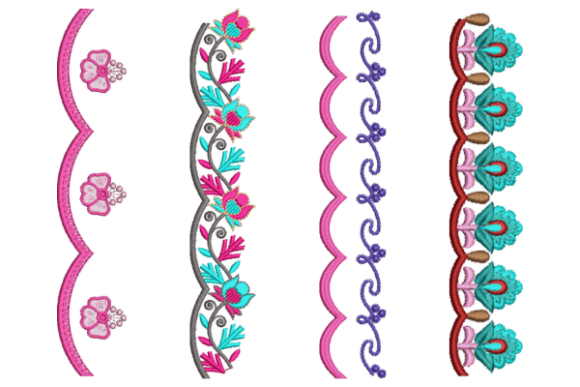
- Hoop size matters. While the description says it works on “any fabric you like,” check your actual hoop dimensions. Some versions of floral borders extend wider than expected—measure before hooping your garment or home decor item.
- Licensing clarity is essential. If you’re selling finished products or offering Delicate Floral Borders as part of a digital embroidery bundle, verify commercial use rights. Not all borders are cleared for resale—don’t assume.
- Inspect small details at 100% zoom. Look for tiny jump stitches near vine tips or overlapping petals. Clean digitizing means fewer trims and smoother transitions—critical for professional-looking embroidered patches or custom apparel.
Not Just for “Floral Lovers”—A Strategic Design Asset
I’ve used Delicate Floral Borders beyond obvious botanical projects: as a framing element around monograms on nursery blankets, as a subtle repeat motif on café aprons, even as a refined divider between text blocks in an Etsy shop banner mockup. It’s versatile—but only when treated with intention. It won’t carry a loud branding message, but it will reinforce calm, quality, and craftsmanship.
For small shop owners and creative entrepreneurs, that’s valuable real estate. In a market flooded with dense fill-stitch borders and cartoonish applique designs, Delicate Floral Borders stands out by stepping back. It gives your handmade product room to breathe—and your customer room to feel.
Final Thought: Choose It When You Want Quiet Confidence
If your goal is impact-at-a-glance, look elsewhere. But if you’re building a cohesive line of embroidered kitchen linens, launching a slow-living apparel collection, or designing personalized gifts where texture and tone matter more than trend, Delicate Floral Borders earns its place in your design assets. It’s not background noise—it’s thoughtful punctuation. And in embroidery, punctuation is everything.